“What is reality?”
Dr. Sara Imari Walker
Understanding reality is remarkably quite straightforward.
In the annals of scientific history, there have been numerous instances where fields of study have evolved in a fragmented manner. One such intriguing case is the development of particle physics and cosmology that for 125 years have lacked a comprehensive ontology. Instead, these fields were characterized by a patchwork quilt of partial ontologies, each patch emerging from a different point of view and employing diverse mathematical frameworks.

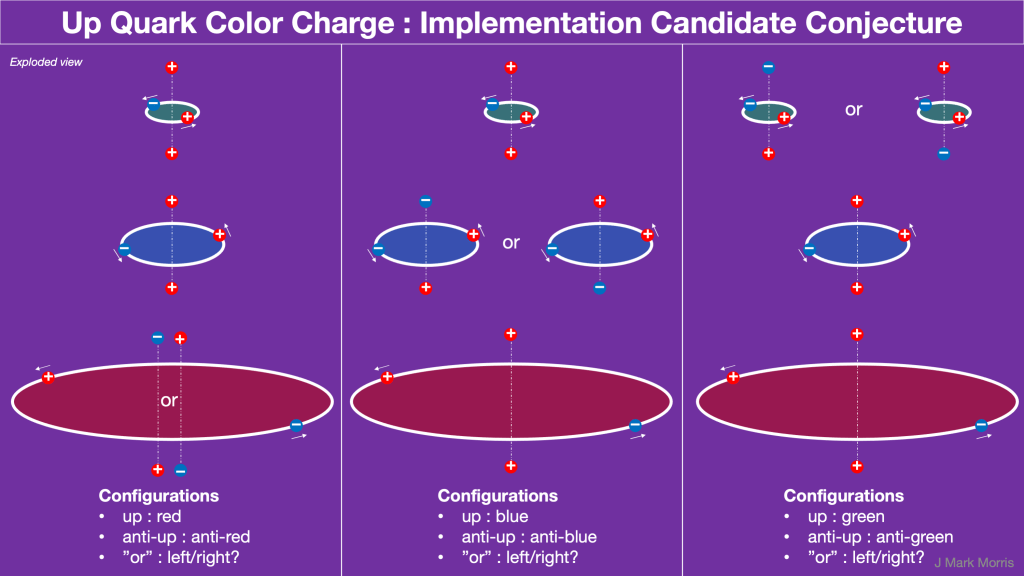
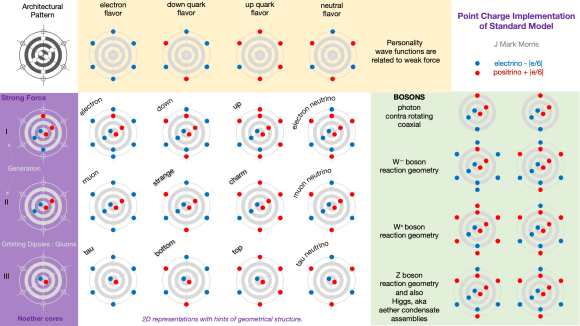
Circa 1900 physicists didn’t explore the architecture space of a reductionist system of point charges aka point potentials. This missed opportunity has resulted in a patchwork quilt of fragmented ontologies of physics and cosmology. Nature is simply a Euclidean void in time and space populated with energetic point potentials. They emit a spherically expanding potential at each continuous point on their path.
Each point potential is acted upon by all impinging spherical potential waves. Imagine a continuous stream of Dirac spheres all centered on points comprising the emitter’s path. Point potential field speed is a universal constant. The magnitude of the point potential maps to |e/6|. Assemblies form!
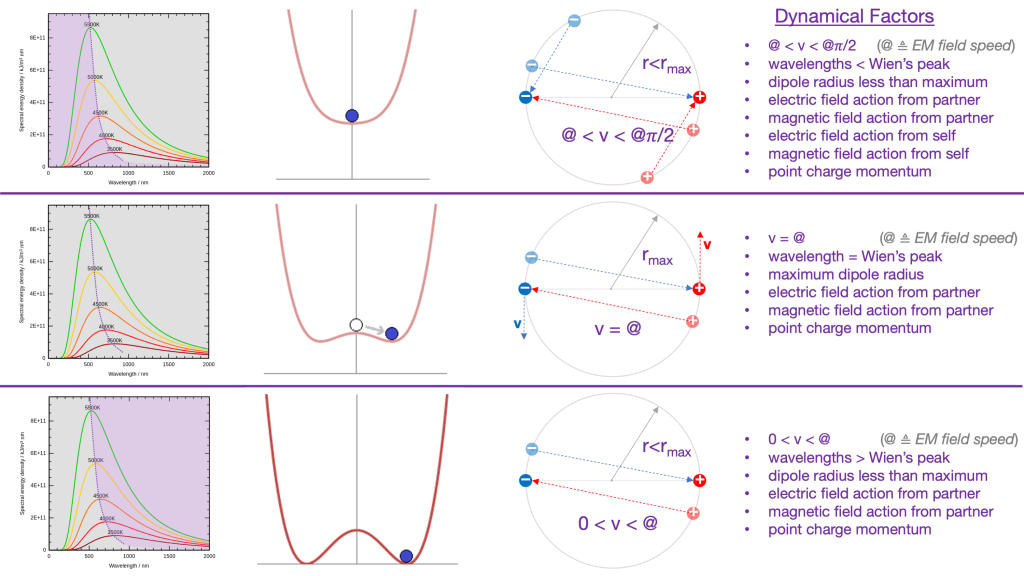
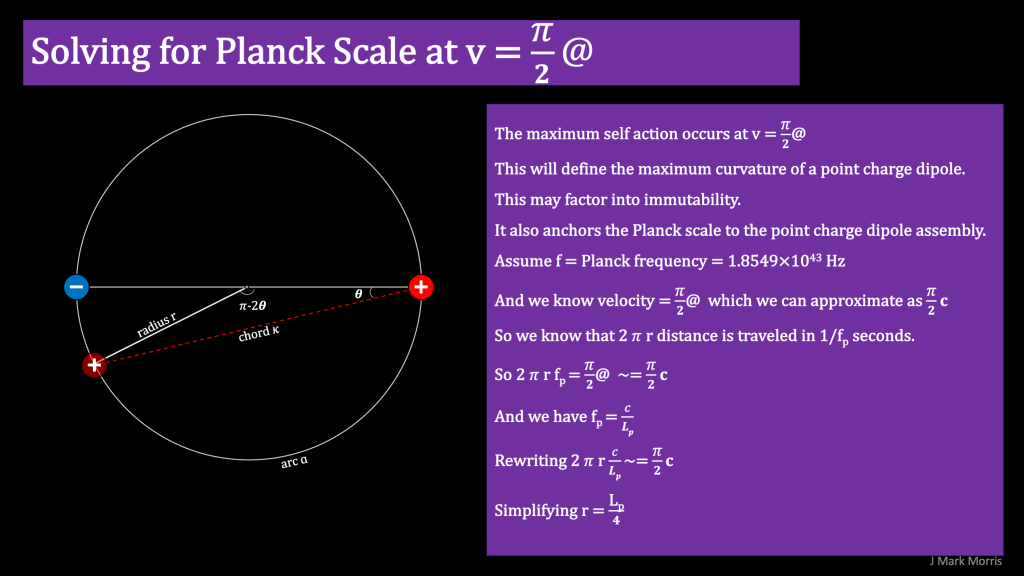
The photon is an assembly of point potentials that sails on its own fields. Thus c approaches field speed in deep space. Lastly, nature does not limit the speed of a point potential. The speed may surpass field speed. In an orbiting binary the maximum speed is @ * pi / 2. Try to derive this result. Along the way, you will find that there is a maximum curvature to a point potential binary, i.e., no singularity.
Don’t worry about the cognitive dissonance. It all makes sense. In an orbiting positive and negative point potential binary, we find the long sought after symmetry breaking point when v = field speed @ ~=c. Think about why that is. Yes, THAT symmetry breaking point.
I presume free point potentials with v > @ = field speed ~= c are quite reactive. We know what particle showers look like in the atmosphere or in colliders. Very high energy point potentials are beyond perturbative to assemblies in their path. They may react and create a cascade.
We see that the point potential speed exceeding field speed isn’t a big deal. Either that energy gets distributed through a particle shower or we have the specific orbiting binary assembly that clicks off h-bar and changes radius and frequency accordingly. This is the accountant.
I do want to point out that when a point potential has a speed greater than field speed in an orbiting binary assembly that we are in the totally unexplored realm of self-action. It’s challenging to think about. THIS is how neoclassical physics gives quantum mechanics the heave-ho.
We need to split the quantum. The quantum is a behaviour of a primal assembly, the incredibly scalable point potential binary. It is time for us to recognize how nature emerges as assemblies of point potentials. With that knowledge we can advance quickly in all sciences. This thread is essentially the README to the source code of nature. Everyone needs to think deeply.
Well, I hope Sara reads my replies and understands them. She is a very creative person, but on the other hand, it is very difficult for physicists to consider ideas beyond the accepted, but woefully incorrect, narratives.
J Mark Morris : Boston : Massachusetts
 Neoclassical